Projects
Flow on a large infrastructure site
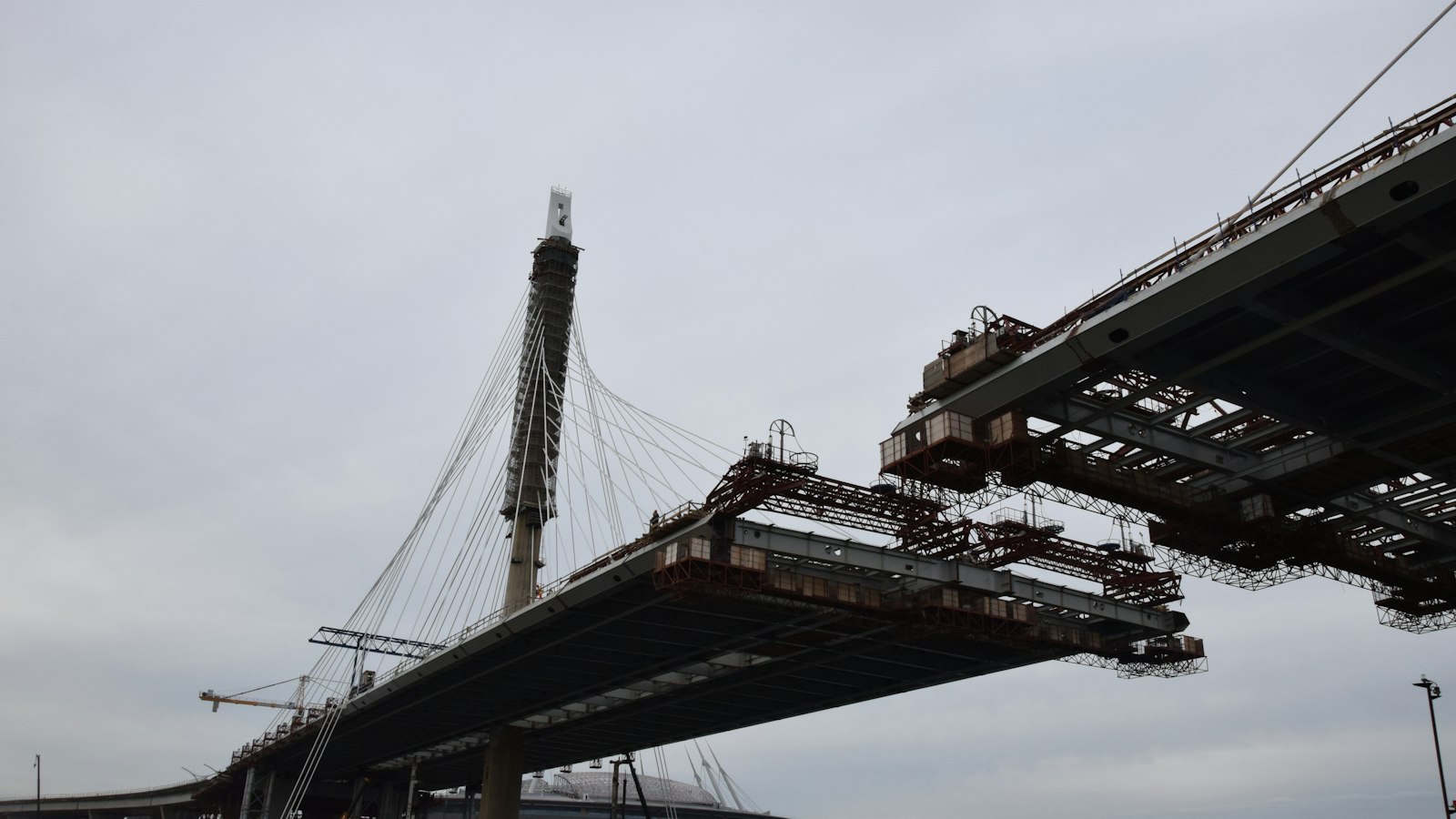
Large infrastructure projects (power plants, ports, steel plants, material-handling systems, transmission lines) rarely finish on their original date. When a failed project is analysed, the delays are almost always blamed on events outside management’s control.
But is that the whole story? Or are some delays caused by the way these projects are managed? Three common management beliefs create a great deal of waste.
Belief 1: “We don’t have enough people”
A large infrastructure project is really many sub-projects running more or less in parallel and coming together at the end. It needs a lot of management attention, technical expertise and direct labour: engineers, fabricators, civil crews.
These are almost always scarce. Yet the standard approach is to start every work front as early as possible, so nothing is “left for later”. The consequences:
- Engineering and procurement juggle every sub-project at once. Every one of them slows down before site work even starts.
- Civil work begins without complete drawings, and stops when questions arise.
- Many civil fronts open together, each with a thin crew, so each moves slowly.
Ask any manager about the delays and the answer is usually “inadequate resources”, followed by a search for experienced people who are never quite available. What goes unnoticed is how much of the existing capacity is wasted by spreading it so thinly: preparation for site work is incomplete, and issues wait because managers are stretched.
Belief 2: “Big orders save money”
Large projects have big procurement budgets, and it is natural to negotiate hard. A common way to get better prices is to bundle parts from many modules into large orders across multiple vendors.
But bundling has a hidden cost. Design and procurement start working in batches across all sub-projects. Everything arrives at site together, so every sub-project has to be worked on in parallel. At the end, each sub-project must be commissioned separately and integrated with the others, all at the same time. Rework and cascading delays follow.
Belief 3: “More detailed schedules mean more control”
Big projects are often scheduled in extraordinary detail, down to the fourth or fifth level of tasks. Each detailed task becomes a deadline, and each deadline gets its own safety margin. The overall plan becomes longer, and the safety is wasted in execution. Problems surface only near milestones, when they can’t be recovered. Issue resolution slows, blame spreads, and the plan is repeatedly redrawn to match what has already happened. Execution ends up driving the plan, instead of the other way round.
A different approach
Accept the limits, then exploit them. Start by acknowledging that people and management attention are limited. Then focus on getting the most from them, instead of wasting them on multitasking.
Treat the project as a portfolio of sub-projects. Stagger the sub-projects according to the available resources. In design and procurement, set a limit on work in progress and a clear priority order of modules. A new module starts not on a planned date, but when an active one is completed. Staggering in the office naturally leads to staggering on site.
Picture twelve civil work fronts, each needing about 1,500 worker-days, and 120 workers available. Open all twelve at once with ten workers each, and every front takes about 150 days; nothing is ready for equipment erection until month five. Open four at a time with 30 workers each, and the first four are done in about 50 days, the next four by day 100, the last four by day 150. The last front finishes at the same time on paper, but erection starts three months earlier on two-thirds of the site, supervisors manage four fronts instead of twelve, and the waiting and rework that thin crews create mostly disappear. In practice, the staggered site finishes first.
Get the price benefit without the batching. Organise purchasing so that decisions are made together and contracts give volume pricing, while deliveries and work are released module by module, in the order the site needs them.
Plan less, manage daily. Move safety out of individual tasks into a shared project buffer, where it protects the whole project. Replace milestone reviews with daily management of flow, so issues are found and fixed while they are still small.
On a large project, the scarcest resource isn’t steel or cement. It is attention. Spread it thin, and everything slows.
Applied together, these principles let large projects finish noticeably faster, with fewer surprises at commissioning.
Related reading

Strategy, supply chain & sales transformation consultant. About · Book a discussion