System Thinking
Why consulting companies are beneficial?

Yesterday, I was having a discussion with my uncle. He is a lawyer by profession and also sits on board with many startups. He mentioned that one of the recent board meetings was quite interesting. They have suggested a startup’s CEO to get a consulting firm to review their transition from early-traction to growth phase.
I candidly asked him, “Why do you think a startup at this stage needs consulting help — is it not the job of the founders (and board) to figure this out?”
He did not answer, instead put up a counter-question: “Mohit, you are a consultant, where do you add value to your client? Or try a broader question — why does the corporate world need consulting firms?”
I paused a bit and replied, “Mostly, we, as part of consulting companies, go and identify the root of the problem and/or ratify the approach taken by the management to solve a particular problem.”
Noticing that I am looking forward to his reaction, he nudged his head in agreement.
I continued, “It is not that the company’s board is clueless about direction or decision, but they are looking for a second opinion.
A simple analogy would be how a doctor recommends his patient to get a second opinion, just to ensure that he is not missing any perspective or overlooking some obvious point.”
He interjected and said, “This doctor analogy fits well in this case.”
Before he could proceed, my aunt came and asked if we would like a cup of coffee or tea. I requested coffee, and my uncle settled for green tea.
Seeing that now I have his attention, he continued, “Doctor is asking for a second opinion as he is making an assessment solely from his/her viewpoint. However, an organization has multiple people operating at many levels and departments. Why would they suffer from the problem of a single opinion like the doctor?”
And he looked at me, seeking a reply to his question.
I was a bit taken back, as I haven’t thought through my example, and now I did not have a comprehensive explanation.
So I said, “I am not sure of it, would you please explain it to me?”
Instead of answering, he asked me, “Do you remember our discussion on Charlie Munger’s speech — “The psychology of human misjudgment” given to Harvard students?”
The talk was centered on how human biases affect decision-making, behaviour, and at times lead to abject irrationality.
I said, “Yes.”
He continued, “Can you relate any of the biases shared in Charlie’s speech, which might be clouding the thinking of the company’s management/board?”
I jumped with excitement as I could relate the availability bias to the board’s decision-making.
The availability heuristic, also known as availability bias, is a mental shortcut that relies on immediate examples that come to a given person’s mind when evaluating a specific topic, concept, method, or decision. (Wikipedia)

I said, “We all suffer from the bias of giving high importance to the information presented in front or easily available to us.”
He replied: “Would you care to elaborate?”
I said, “The management, doctors or rather all human beings tend to over-weight the lucid evidence or the evidence easily obtained, as they are closely associated with the case/situation. And as a matter of fact, all information available to them got accrued over a period of time. Thus, they may not dig deeper or go back to the past records. Or might be guilty of heavily discounting the past information.”
I paused a bit to check if my uncle is following me and then continued.
“A consultant (or consulting company) doesn’t suffer from this bias (relatively — consultants are also humans) and thus can give a much more realistic assessment of the situation.”
He replied, “Glad that you could make this connection.”
I smiled.
And then he continued, “There is one more bias, which at times leads to many disastrous consequences for the company — commitment and consistency bias.”
Commitment and consistency bias is our tendency to continue to act according to the previous commitments we’ve made. It’s a reluctance to change our course of action once we’ve chosen it. (wealest.com)
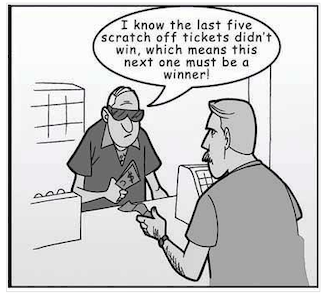
Observing a slightly lost look, he understood that I have not made a clear connection between our discussion and this bias.
He continued, “The management generally chooses a direction for the company and acts on that direction. People hate being inconsistent, as in general inconsistency is perceived as a sign of incompetence. Thus, when the business environment changes, it becomes difficult for them to adjust or change their opinion about the situation. And sometimes they don’t adjust/change when they should.”
My eyes lit up as I could understand the entire essence of the discussion, starting from my question to him regarding the startup consultation.
And I said, “If one is aware that such human biases exist in all, then it makes a lot of sense to get a second opinion or a perspective of fresh eyes from outside their environment. Analysis of consulting companies doesn’t get colored by such biases. Thus, a second opinion from a consulting firm will simply eliminate the gap in management’s decision-making and adds a lot of value.”
He added, “These biases are just not limited to any corporate or startup. We all should be aware of these human biases and take preventive steps to avoid cognitive clouding and error-prone decision-making.”

Strategy, supply chain & sales transformation consultant. About · Book a discussion